
Updating My AST Tracker
Updating My AST Tracker: Adding BlueBird 6 and Moving the Globe to 8K
Over the last few weeks, I’ve been steadily refining my AST SpaceMobile tracker. It started as a curiosity project and slowly turned into something I check daily just to see how the constellation is behaving in real time. With the successful launch of BlueBird 6, it felt like the right moment to expand the tracker and improve the visuals at the same time.
This update ended up being more involved than I originally expected, but in a good way.
Adding BlueBird 6 to the Tracker
The first step was extending my existing BlueBird 1–5 setup to include BlueBird 6. I made a conscious decision early on not to rewrite or refactor anything. The tracker was already stable, and I didn’t want to introduce bugs just to accommodate one more satellite.
I added the new NORAD ID alongside the existing entries and let it flow through the same checkbox controls, tracking selector, and propagation loop that was already in place. Because everything was built around a shared data structure, BlueBird 6 immediately behaved like the rest of the constellation.
Once it showed up on the globe, selectable and trackable like the others, I knew the foundation of the tracker was doing exactly what it was supposed to do.
Why I Decided to Upgrade the Earth Texture
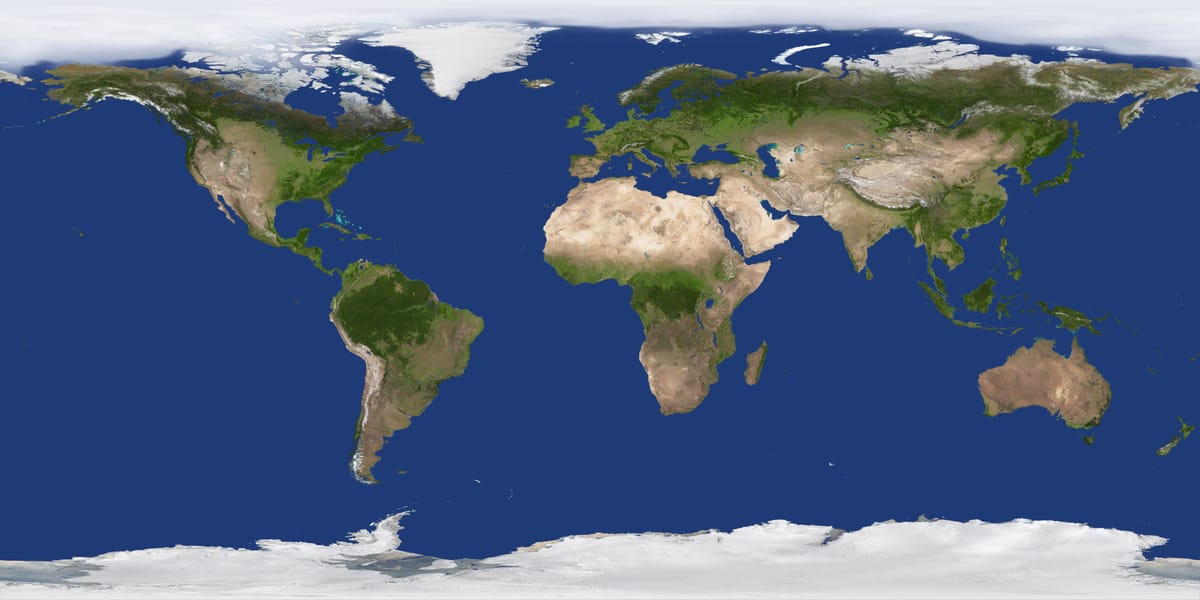
After BlueBird 6 was live in the tracker, the Earth itself started to feel like the weakest part visually. The default texture worked fine from a distance, but once you zoomed in, the lack of detail became obvious. Coastlines were soft, terrain lacked definition, and the globe didn’t quite match the level of precision shown by the satellite data moving above it.
Since the entire purpose of the tracker is visual context, seeing satellites in relation to the planet, improving the globe felt like a natural next step.
Moving to an 8K Globe Image Without Breaking Anything
This part took some experimentation.
I tried several high-resolution Earth textures and quickly ran into a common WebGL problem. Just because an image loads in a browser tab does not mean it can be used as a texture inside a WebGL scene. Some sources failed silently due to cross-origin restrictions, which caused the globe to stop rendering altogether.
After a few false starts, I settled on an 8K Earth day map hosted on a CORS-friendly CDN. Once I swapped it in, the difference was immediate. Coastlines were crisp, landmasses were clearly defined, and zooming in actually felt rewarding.
I intentionally kept the existing bump map in place. It adds just enough terrain depth to give the planet some texture without changing how lighting or shading behaves. Most importantly, this was a true drop-in replacement. No changes to camera logic, controls, or satellite math were required.
Why I Skipped the Specular Map for Now
I did experiment briefly with adding a specular or water map to give the oceans more shine. Visually, it looked great, but it introduced an unexpected issue. Once the specular layer was added, the satellite rendering layers began to behave inconsistently, and in some cases the satellites stopped showing up entirely.
Rather than force the issue, I backed it out.
At this stage, stability matters more than visual flair. The tracker’s job is to show accurate, real-time satellite positions, and I’m not willing to compromise that just for shinier oceans. The specular map is something I may revisit later, but only if it can be added without interfering with satellite rendering.
The End Result
With BlueBird 6 fully integrated and the globe upgraded to a true 8K texture, the tracker feels noticeably more complete. Satellites stand out more clearly against the planet, zooming feels more immersive, and the overall presentation better matches the technical depth happening behind the scenes.
This update wasn’t just about adding another satellite. It was about tightening the entire experience while keeping the system stable and predictable.
For now, I’m happy to sit back and watch BlueBird 6 sweep across a much sharper Earth. The tracker keeps evolving, and that’s exactly how I want it.