
AST SpaceMobile Unveils Next-Generation BlueBird Satellites
AST SpaceMobile prepares next-generation BlueBird satellites to bring high-speed cellular broadband directly to smartphones worldwide.
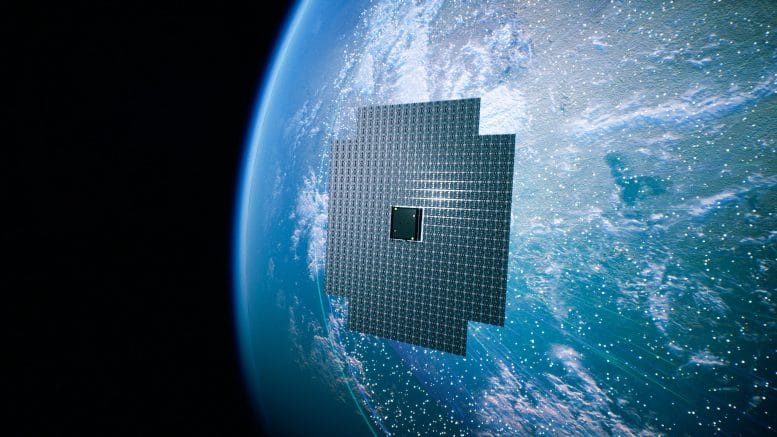
AST SpaceMobile is preparing to enter its next major phase with the deployment of its next-generation BlueBird satellites, scheduled for launch throughout 2025 and 2026. The new spacecraft represent a substantial leap forward in the company’s mission to deliver direct-to-cellular broadband connectivity to standard smartphones anywhere on Earth—without specialized hardware or ground-based infrastructure.
A New Class of Commercial Satellites
The next-generation BlueBird satellites are designed to provide continuous 4G and 5G broadband service directly from low Earth orbit. Central to this capability is an unprecedented phased-array antenna system measuring nearly 2,400 square feet per satellite. Once deployed, these arrays will be the largest commercial phased arrays ever placed in low Earth orbit, significantly surpassing the 693-square-foot arrays used on AST SpaceMobile’s first-generation BlueBird spacecraft.
This dramatic increase in antenna size enables far greater signal strength, coverage density, and spectral efficiency—key requirements for reliable broadband service to unmodified mobile phones.
Purpose-Built for Direct-to-Device Broadband
Each next-generation BlueBird satellite is powered by AST SpaceMobile’s proprietary AST5000 application-specific integrated circuit (ASIC). This custom silicon is designed specifically for space-based cellular broadband and supports up to 10 GHz of processing bandwidth per satellite.
According to the company, this architecture enables peak data rates of up to 120 Mbps per coverage cell, supporting high-bandwidth applications such as video streaming, voice calls, messaging, and data services. Each satellite can generate more than 2,000 active cells simultaneously, allowing it to serve vast geographic regions at once. Collectively, this translates to millions of daily connections per satellite coverage area.
Manufacturing at Scale
To support the planned constellation, AST SpaceMobile has invested heavily in vertical integration and domestic manufacturing capacity. The company now operates nearly 500,000 square feet of production facilities, supported by a workforce of more than 1,800 employees.
These facilities handle the full production lifecycle, including micron-level component assembly, phased-array integration, ControlSat systems, and final environmental testing. AST SpaceMobile reports holding more than 3,800 patents and patent-pending claims, reflecting its focus on proprietary technology and long-term defensibility.
Phased-array production is on track to support 40 BlueBird satellites by early 2026, with manufacturing capacity expected to reach six satellites per month by the end of 2025.
Bridging the Digital Divide
AST SpaceMobile’s long-term vision is to extend true broadband connectivity to regions where traditional terrestrial infrastructure is impractical, uneconomical, or impossible. By partnering with mobile network operators and using licensed cellular spectrum, the company aims to integrate seamlessly with existing mobile ecosystems while expanding coverage to underserved and remote populations.
With the upcoming BlueBird launches, AST SpaceMobile is positioning itself to move from technology demonstration to large-scale commercial deployment.
Looking Ahead
As launches begin across 2025 and 2026, the next-generation BlueBird constellation will serve as the backbone of AST SpaceMobile’s global direct-to-device network. Additional launch announcements, service milestones, and investor events are expected as the program progresses.
AST SpaceMobile’s approach—combining massive phased arrays, custom silicon, and high-volume manufacturing—marks a significant step toward making space-based cellular broadband a practical, everyday reality.